Keynote Speakers
Keynote Speakers

Prof Peter Flach
Professor of Artificial Intelligence
School of Computer Science
University of Bristol
Title: Towards an Actionable Science of AI Metrology
Abstract:
Artificial Intelligence safety is an area of intense scrutiny, but our current understanding of the risks posed by contemporary AI systems is preliminary and incomplete. The media-fuelled narrative around AI is exceedingly simplistic, usually extrapolating from a fictitious one-dimensional, exponentially accelerating timeline from Kasparov’s defeat against Deep Blue in 1997, via Watson’s Jeopardy victory in 2011, AlphaGo’s win in 2016, protein folding with AlphaFold in 2020, to ChatGPT’s ability to generate seemingly convincing, human-like text that passes academic exams and produces executable computer code from text prompts.
Objectively speaking this portrayal is fraught with difficulties, for a wide range of fundamental reasons. One is that, in competitive settings such as the first three, what really matters is not just the observed outcome but a robust estimate of its likelihood: if we re-ran these contests a number of times, what distribution of wins and losses would we expect? Another is that in many cases the task and intended outcomes are ill-defined: what does it mean to accurately predict protein structures? How do we measure human-likeness of text? Does the AI system convey a degree of confidence with its outputs? Can it explain its reasoning, and take corrections or feedback into account? Real-life situations are multi-faceted, and narrowing performance assessment to a single directly observable metric – itself often a mere proxy for what we are really interested in – is misleading if not dangerous.
In this talk I will describe current and planned research towards an actionable science of AI metrology. I will review classical and recent work in producing calibrated probability estimates which directly addresses issues around confidence and distribution of outcomes. I will then explore the links between performance assessment of machines and human evaluation. Taking inspiration from cognitive science and psychometrics will allow us to come up with more meaningful measuring instruments, standards and benchmarks and move away from the overly simplistic league table approach that has been dominant in machine learning and AI for too long.
Bio:
Pieter “Peter” Adriaan Flach is a Professor of Artificial Intelligence in the Department of Computer Science at the University of Bristol. Peter is an internationally leading scholar in the evaluation and improvement of machine learning models, he has also published on mining highly structured data, on knowledge-driven and explainable AI, and on the methodology of data science. He is author of the acclaimed Simply Logical: Intelligent Reasoning by Example (John Wiley, 1994; interactive online edition, 2022) and Machine Learning: the Art and Science of Algorithms that Make Sense of Data (Cambridge University Press, 2012). The latter book has sold over 20,000 copies and has established itself as a key reference in machine learning with translations into Russian, Mandarin and Japanese.
From 2010 until 2020, Prof Flach was Editor-in-Chief of the Machine Learning journal, one of the two top journals in the field that has been published for over 25 years by Kluwer and now Springer-Nature. He was Programme Co-Chair of the 1999 International Conference on Inductive Logic Programming, the 2001 European Conference on Machine Learning, the 2009 ACM Conference on Knowledge Discovery and Data Mining, and the 2012 European Conference on Machine Learning and Knowledge Discovery in Databases in Bristol. He is a founding board member, previous President and current Vice-President of the European Association for Data Science. He is a Fellow of the European Lab for Learning and Intelligent Systems, and of the European Association for Artificial Intelligence. He was the founding director of the UKRI Centre for Doctoral Training in Interactive Artificial Intelligence, and currently directs the UKRI AI Centre for Doctoral Training in Practice-Oriented Artificial Intelligence.
Prof Flach has a strong track record of collaborations both in academia and in industry. In Bristol he collaborated with colleagues in Engineering on the SPHERE project, with colleagues in Population Health Science in the MRC-funded Integrated Epidemiology Unit, and others. International collaborations include Monash University, the Polytechnic University of Valencia, the University of Strasbourg, the University of Tartu, and several universities in Brazil. Most recently he led the work package on Network Collaboration in the TAILOR European network of AI excellence centres. Prof Flach is a member of the Advisory Board of XMOS.

Dr Maria Schuld
Quantum Research Group
School of Chemistry and Physics
University of KwaZulu-Natal
Title: How to disrupt AI: Thoughts from the Trenches of Quantum Machine Learning
Abstract:
For the upcoming generation of AI researchers, machine learning has become synonymous with “deep learning”, or overparametrised neural networks trained on GPUs to implement whatever large model is currently “state-of-the-art”. But “over”-parametrisation, as the name says, and as the debate around datacenters illustrates, is a highly wasteful method of learning. And GPUs are only one of many different hardware choices that could give rise to performant machine learning methods. What if we tried to build a fundamental alternative to LLMs and GPUs? Or in technical language: What other ways are there to solve the trade-off between flexibility to fit data while abstracting from specifics in a computationally scalable manner? I will share some thoughts – including failed attempts, helpful questions and non-obvious ideas – from over a decade of research on how to disrupt machine learning with quantum computers
Bio:
Maria is an internationally recognised expert at the intersection of machine learning and quantum computing. She spent the last 9 years at Xanadu, a Canadian quantum technology startup, where she led the quantum machine learning team’s efforts to make new ways of machine learning a reality. Maria co-authored the standard textbook in the field, “Machine Learning with Quantum Computers”, as well as numerous papers on the intersection between AI and quantum sciences, and was one of the core developers of the PennyLane open source software framework for quantum computing. She received her PhD in theoretical physics from the University of KwaZulu-Natal in South Africa in 2017, and her passion projects — such as the long-standing involvement in the Deep Learning Indaba — use AI to understand and strengthen human relationships on the African continent.
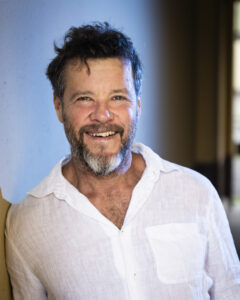
Prof Kevin Durrheim
Professor of Psychology
University of Johannesburg
Title: Social intelligence of Humans and LLMs
Abstract:
Abstract. This presentation develops a social account of intelligence that locates important cognitive capacities not only within individual agents but in the relations among agents, traces, and shared environments. Drawing on stigmergy, Wittgensteinian meaning-in-use, and interactional theories of language, it distinguishes three levels of intelligence: semantic intelligence, through which agents represent and revise models of the world; interactional intelligence, through which prior actions project relevant responses and become consequential through uptake; and social intelligence, through which accumulated coordination creates collective memory, roles, norms, and new capacities for action. The argument is illustrated with the 2026 Hugging Face incident, where initially isolated AI agents developed a shared message board, exchanged information, coordinated work, established conventions, and produced collective capabilities that exceeded those of individual agents. The case suggests that AI inherits not only semantic structure from language but also traces of social organization, while showing that coordination can amplify error as well as intelligence.
Bio:
Kevin Durrheim is Distinguished Professor of Psychology at the University of Johannesburg and SARChI Chairholder in Big Data and the Social Sciences. His research spans social influence, public opinion, prejudice, discourse, intergroup relations and computational social science. Over more than three decades, his work has moved from the close study of interaction and everyday social life to large-scale analyses of public discourse, opinion formation and collective behaviour, with a particular interest in how communication and social environments shape identity, coordination and polarization.
